
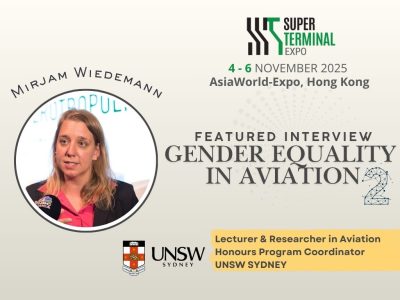
In addition to driving innovation and sustainability across aviation, Super Terminal Expo is also dedicated to amplifying diverse voices within the industry. Against the backdrop of ongoing efforts to achieve greater gender equality in this traditionally male-dominated field, we sat down with Dr. Mirjam Wiedemann, university lecturer, researcher, and international consultant. With expertise spanning Aerotropolis developments, sustainable aviation initiatives, and Advanced Air Mobility, she shares her journey into aviation, the challenges she has faced, and her perspective on fostering inclusivity in the sector.
Interviewee: Dr. Mirjam Wiedemann
Background and Inspiration
Q: Could you share a bit about your background and what inspired you to pursue a career in aviation?
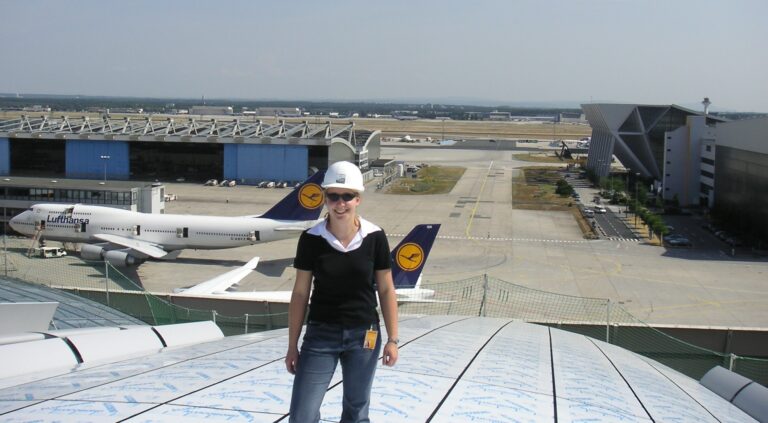
I’m a university lecturer, researcher, and international consultant specialising in Aerotropolis developments, sustainable aviation initiatives, aviation economics, Advanced Air Mobility (AAM), and regional integration for economic development. My journey into aviation began quite by chance—during my industrial engineering studies, I had to complete an internship before starting university. Part of it took place at Berlin Tegel International Airport, where I watched aircraft taking off and landing every day. That experience sparked my fascination. Later, I had the chance to work at Lufthansa at Frankfurt International Airport, which further cemented my love for the world of international travel and the unique atmosphere of airports.
Challenges and Resilience
Q: According to the ICAO’s 2023 global survey, the percentage of women holding positions as pilots, air traffic controllers, and maintenance technicians rose to 4.9% in 2021, up from 4.6% in 2016. As a woman in this predominantly male industry, what challenges have you faced throughout your career, and how have you overcome them?
One of the biggest challenges as a woman in aviation is not only proving that you can do the job but showing that you can often do it just as well—or even better—than your male colleagues. The industry has long been shaped by a traditional, male-dominated culture, and navigating that can be a bit tough. Beyond bias and the occasional “macho” behaviour, I’ve found that men and women often communicate very differently, which sometimes makes it harder for women to have their message heard. Over time, I’ve learned to adapt while also staying true to my own style, and I see this as ongoing work in progress for myself and the industry as a whole.
Career Achievements
Q: Can you share a specific moment or achievement in your career that you believe has contributed to advancing women in aviation?
A highlight of my career was serving as a mentor for women in aviation through an initiative in Western Sydney, designed to inspire women to consider aviation careers in light of the development of the new airport. It was rewarding to share my experiences, open up pathways, and encourage others to see themselves in this industry.
Industry Progress on Gender Equality
Q: Gender equality in the workplace remains a significant issue. In your experience, how has the aviation industry addressed this, and what changes have you observed over the years?
I think the industry still has a way to go, but there has been progress. When I was younger, it was seen as remarkable to have a female pilot—people would sometimes clap when it was announced that a woman was in the cockpit! Today, it’s no longer a surprise, which shows we are moving towards normalisation. Initiatives such as Women in Aviation and dedicated events at conferences are also raising awareness. Recently, I even heard a photographer joke about struggling to fit all us women at the aviation conference into one photo—that’s a good sign of change!
Advice for Aspiring Women
Q: Looking to the future, what advice would you give to young women aspiring to enter the aviation field?
My advice is simple: just go for it, and don’t be afraid to take up space. Aviation needs more diverse voices, and if you’re passionate about it, put your foot down and claim your place in the industry.
Effective Initiatives
Q: What initiatives do you believe are most effective in promoting gender equality in the aviation sector?
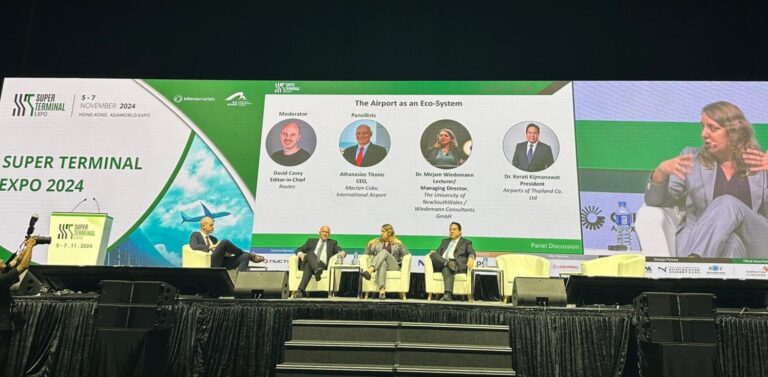
The most effective initiatives are those that normalise women’s presence in aviation and provide strong role models. Visibility matters. Mentoring programs are powerful, and while I’m not a fan of relying on quotas, I believe they can play a role in accelerating change until true equality is achieved.